Few milestones are awaited — and feared — like the first tooth. The good news: teething follows a fairly predictable script, and a prepared parent sails through it far calmer. Here is the timeline most babies loosely follow.
3–6 months: the drooling overture
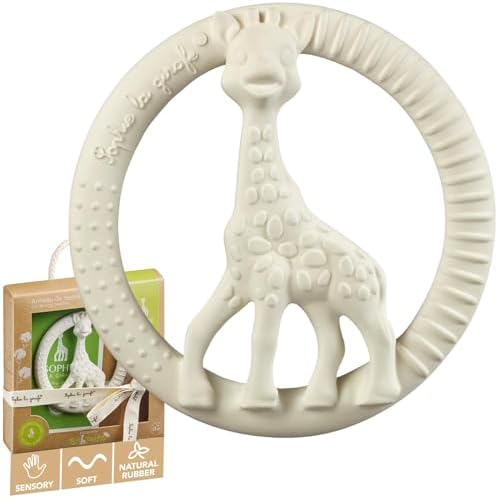
Long before anything is visible, saliva production jumps and everything migrates to the mouth: fists, blanket corners, your finger. Gums may look puffy. This is the perfect moment to introduce a soft natural rubber teether — baby learns to hold and mouth it before the real discomfort begins.
6–10 months: bottom front teeth
The two lower central incisors usually open the show. Expect a few restless nights, flushed cheeks and an urge to gnaw on firm-but-yielding surfaces. A textured teething ring reaches the sore spot better than a flat toy, and a chilled (never frozen) damp washcloth is a fine backup.
8–12 months: top teeth join in
Upper incisors follow, often two at a time. Because the upper gum is broader, rings with several textures and angles earn their keep here. Keep wiping new teeth morning and evening with a soft cloth or silicone finger brush.
12–24 months: molars and canines
First molars arrive around the first birthday and are the largest teeth yet; canines squeeze in afterwards. Chewing pressure helps, so teethers with a flatter, wider section designed for back gums are the tool of choice.
What is teething — and what is not
- Typical: drooling, gum rubbing, mild fussiness, slightly disturbed sleep, appetite dips.
- Not teething: high fever, diarrhea or rash — those deserve a pediatrician call, not a teether.
Three habits that make it easier
- Rotate two or three teethers so one is always clean and dry.
- Wipe natural rubber daily with a damp, soapy cloth — never boil it.
- Offer the teether before the crying peak: prevention beats rescue.
Published: August 15, 2026