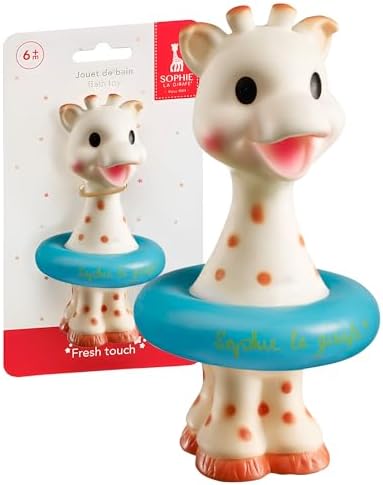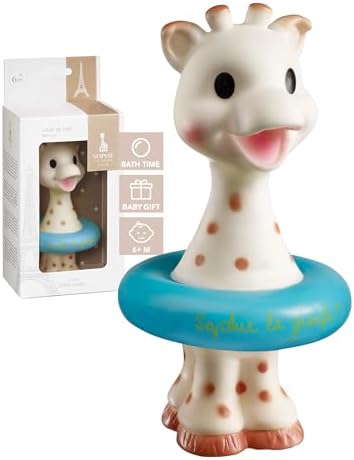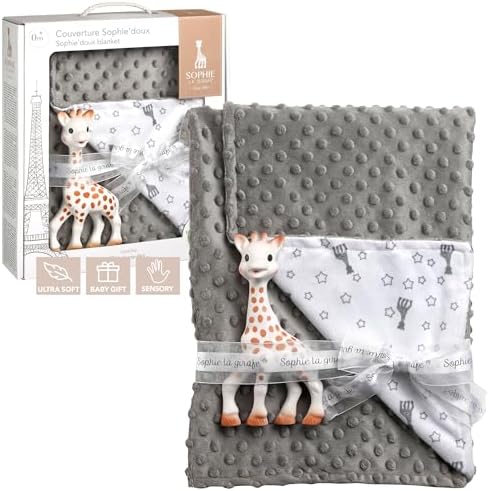
“Awakening the five senses” has been the little giraffe’s mission statement since 1961 — and modern infant research agrees: varied, gentle sensory input is exactly how young brains wire themselves. No flashcards needed; five minutes per sense per day is a feast.
Sight: contrast first, color later
Newborn vision loves bold, high-contrast patterns — which is why dark spots on a light body hold a baby’s gaze long before pastels do. Move the toy slowly across the field of view and let the eyes practice tracking.
Hearing: quiet beats loud
A soft squeak or the whisper of microbeads teaches cause and effect without startling. Shake a rattle to one side, wait for the head turn, celebrate. Repeat on the other side — this is sound localization training in disguise.
Touch: a texture buffet
Alternate warm supple rubber, cool silicone, terry towel and airy cotton muslin during play and dressing. Naming sensations (“soft”, “bumpy”) plants the vocabulary years early.
Taste: the mouth is a lab
Mouthing is not a bad habit — it is the most sensitive exploration tool a baby owns. The job of adults is simply to make sure what reaches the mouth is food-grade safe and clean, then let the research proceed.
Smell: the memory maker
Scent wires straight into memory. A consistent gentle fragrance in the bedtime routine — a spritz of alcohol-free scented water on the sleep sack — becomes a powerful calm-down cue within weeks.
A five-minute session plan
- Minute 1: track the spotted toy left to right.
- Minute 2: squeak or rattle on each side.
- Minute 3: guided touching of two contrasting textures.
- Minute 4: free mouthing of a clean teether.
- Minute 5: cuddle with the familiar bedtime scent.
Stop at the first yawn or head-turn-away — in sensory play, less is reliably more.
Published: August 15, 2026